
Emotional Support Phone

photo by Sinitta Leunen
The other night I caught myself doing something I want to tell you about. I was tired, a little wired, a little restless in that hard-to-name way, and before I had even decided to, my phone was in my hand. I wasn't looking for anything. There was no text to answer, no call to make. My hand just went. And somewhere in the scrolling that followed, a thought floated up. Why do I feel so depleted lately? Why can't I focus? Why am I so restless? So I did what so many of us do now. I started typing those very questions into the glowing rectangle in my palm. I was researching my exhaustion on the exact device that was helping to create it.
Sit with that irony for a moment. We are overstimulated by our phones, our watches, the little wearables that buzz on our wrists and pulse in our pockets all day long. And when the overstimulation finally catches up with us, when we feel scattered and anxious and strangely empty, we reach for the screen to figure out why. The thing causing it has quietly become the place we go looking for relief from it.
And it isn't just me. Look around the next time you are out in the world. At a red light, nearly every driver is glancing down into their lap. People cross the street with their eyes on a screen, walk their dogs without looking up, push strollers and go for runs with a phone in hand. We are all out here together, heads bowed to the same small glow, together and completely alone, overstimulated and distracted from the world around us and from ourselves.
I've started thinking of it as our emotional support phone. Not as a joke, exactly. More as a tender, honest naming of something I see in the people I work with, in the people I love, and in myself. The phone has become the thing we reach for the instant a feeling we'd rather not feel begins to surface.
What are we reaching past?
Pay attention, just for a day, to the moment right before you pick up your phone. Not the scrolling, the reach. What were you feeling in the few seconds before your hand moved?
For most of us, it's some version of bored, lonely, angry, anxious, tired, restless, worried, or sad. An uncomfortable feeling rises, and almost instantly, the phone is there to meet it. We don't have to sit in the boredom. We don't have to feel the loneliness. We don't have to let the anger move through us. The phone catches the feeling before it can fully land, and hands us something else to look at instead.
This is so human. I want to say that clearly, because I don't want you to read this and feel ashamed. The reaching makes complete sense. The trouble is that the thing we're reaching for was engineered to be reached for.
It's not your willpower. It's the design.
Here is what helped me stop blaming myself, and what I hope helps you too. Your phone is not a neutral tool that you happen to be using badly. It was designed, very deliberately, to be hard to put down.
Tristan Harris, a former design ethicist at Google, has spent years explaining that our apps borrow their core mechanism from slot machines. It's called intermittent variable rewards. It's the same unpredictable payout that keeps a person sitting at a slot machine, pull after pull. Every time you swipe to refresh a feed, you are pulling a lever, not knowing whether this time you'll get something delicious or nothing at all. That little uncertainty is exactly what makes it so hard to stop. The deeper research on this comes from the anthropologist Natasha Dow Schüll, who spent years studying how machines are built to keep us in what she calls "the zone."
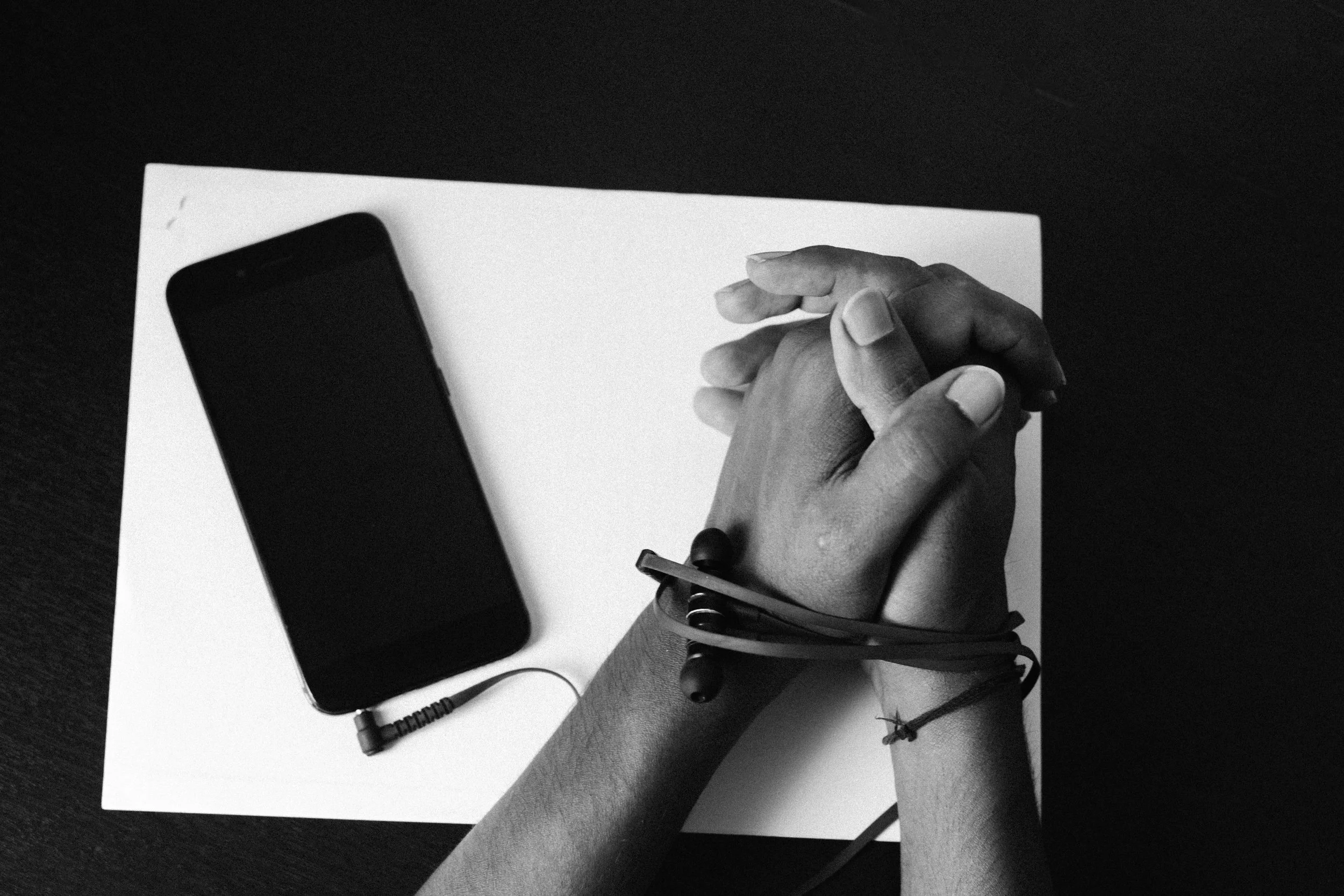
photo by Ravi Singh
What the machine pays out is a small hit of dopamine, the brain chemical that whispers more, again, keep going. Anna Lembke, a psychiatrist at Stanford and the author of Dopamine Nation, calls the smartphone "the modern-day hypodermic needle, delivering digital dopamine 24/7 for a wired generation." We have all, she writes, become vulnerable to compulsive overconsumption. Not because we are weak, but because we are human beings holding a device that was built to take advantage of how human beings work.
And it never leaves our side. Recent reports estimate that we now pick up our phones somewhere between 185 and 205 times a day, roughly once every five minutes we are awake. Half of those pickups happen within three minutes of the last one. The phone is always with us, always by us, always within reach. So of course we reach.
The cost of the cheap hit
This is the part we feel but rarely say out loud. The dopamine the phone gives us is real, but it's cheap. It's a quick, hollow hit that fades almost as fast as it arrives, and it leaves the original feeling completely untouched.
The loneliness is still there. The boredom is still there. The grief, the worry, the anger, all still there, waiting just under the surface, now with a faint film of restlessness on top. We numbed the feeling instead of letting it move through us, and our feelings need to move. They are energy in motion. When we keep reaching past them, they don't disappear. They get stored and stuck and stagnant in the body.
It helps to understand what's happening underneath, because it explains why we end up feeling so overstimulated. Every little ping, like, and refresh gives us a small hit of dopamine, a quick spike of good. But the brain is always working to keep us in balance, so right after that spike, it tips us down a little lower than where we started. That dip is the restlessness, the itch, the quiet sense that something is missing. And what do we usually do with that feeling? We reach for the phone again, chasing the next spike to climb back up. Around and around we go.
Over time, our brain responds to all that stimulation by turning its own dopamine down. So the ordinary moments of life, the slow ones, the quiet ones, start to feel a little flat, and we need more and more input just to feel normal. Meanwhile, all of that scrolling and buzzing and notifying keeps our nervous system switched on and scanning, as if something important is always just about to happen. This is why we can feel wired and exhausted at the very same time. Anna Lembke describes this as the seesaw between pleasure and pain, and most of us are riding it all day long without ever realizing it. And, gently, this is not a personal failing. It is simply what happens when a very human brain meets a device designed to keep it reaching.
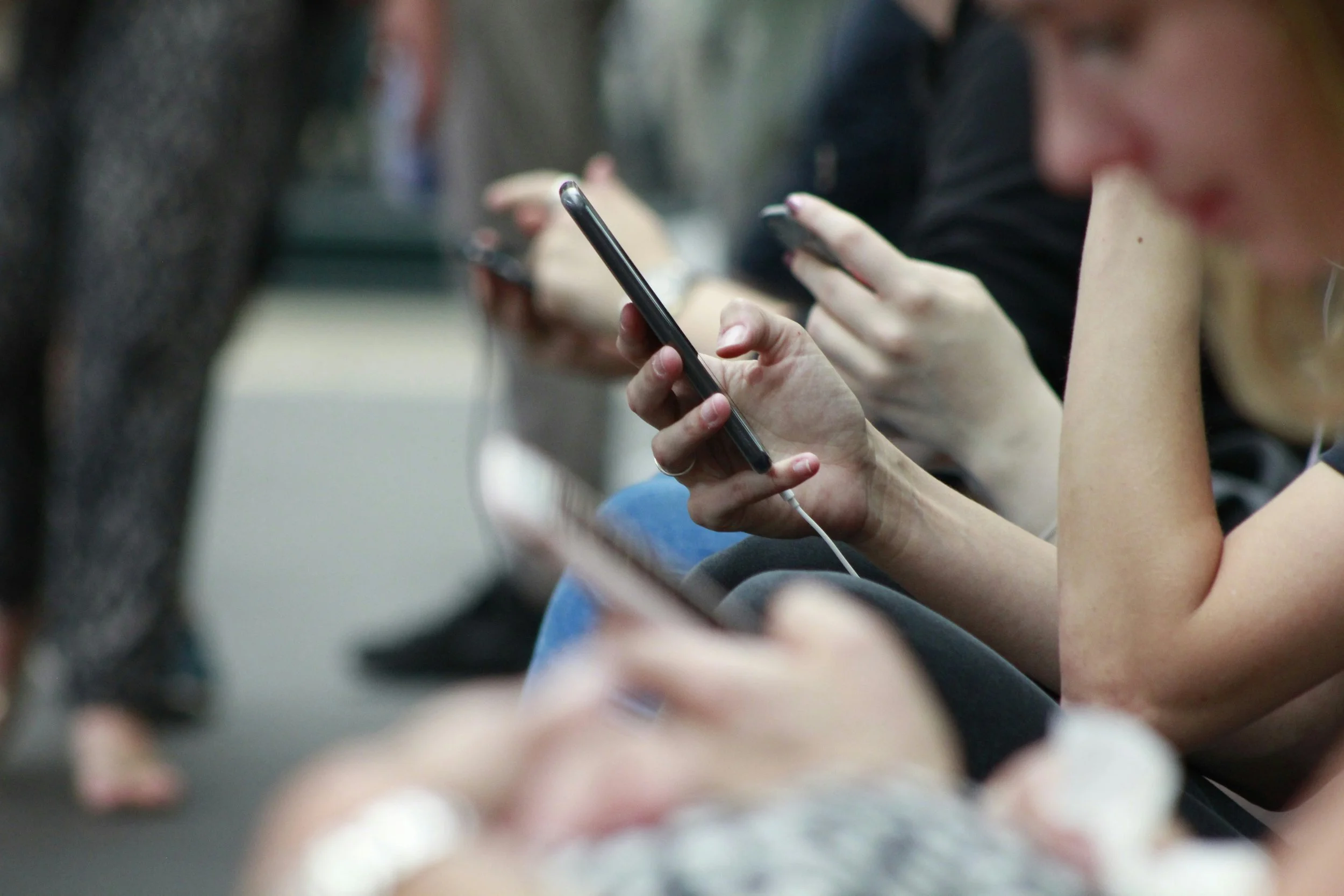
photo by Robin Worrall
There's a second cost too, and it's our attention. Gloria Mark, a researcher at the University of California, Irvine, has found that the average time we hold our focus on any one screen has dropped from about two and a half minutes twenty years ago to roughly 47 seconds today. Forty-seven seconds. And once we get pulled away from something, it can take around 25 minutes to truly find our way back to it. No wonder we feel like we can't focus, can't finish a thought, can't sink all the way into a conversation. We have been trained, swipe by swipe, into distraction.
Losing touch with our own knowing
There is a deeper cost still, and it's the one I feel most tender about. Little by little, the phone pulls us away from our own inner knowing, the quiet voice of intuition that has always lived in the body. We used to check in with ourselves to know how we were doing. More and more, we check a screen instead.
Think of the wearable that tells us we slept poorly on a morning we actually woke up feeling rested and clear. Instead of trusting the body that feels good, we believe the device, and just like that, we decide we must be tired. We let the ring or the watch or the app become the authority on our own experience, on our sleep, our energy, our rest, our worth. The more we hand that knowing over to something outside of us, the quieter our own inner voice becomes, until we can barely hear it. Our intuition, our gut sense, the felt wisdom of the body, these are not small things. They are how we come home to ourselves. And every time we reach for the phone to tell us how we are, we are quietly practicing not listening to the one source that has always known.

photo by Becca Tapert
A gentler way back
So what do we do? Not throw the phone in a river, though if you want to, you have my blessing. This isn't all-or-nothing, and it isn't about white-knuckling your way to more discipline. It's about putting a little space between you and the device, so the reach becomes a choice again instead of a reflex.
Start with curiosity instead of rules. The next time your hand drifts toward your phone, pause and ask, What am I feeling right now? What might I actually need? You don't have to do anything differently yet. Just notice. Noticing is paying attention on purpose, and it's where every bit of change begins.
Then, because our phones really are addictive, the most effective thing is plain physical distance. We can't hold something in our hand and set a boundary with it at the same time. A few small experiments to try:
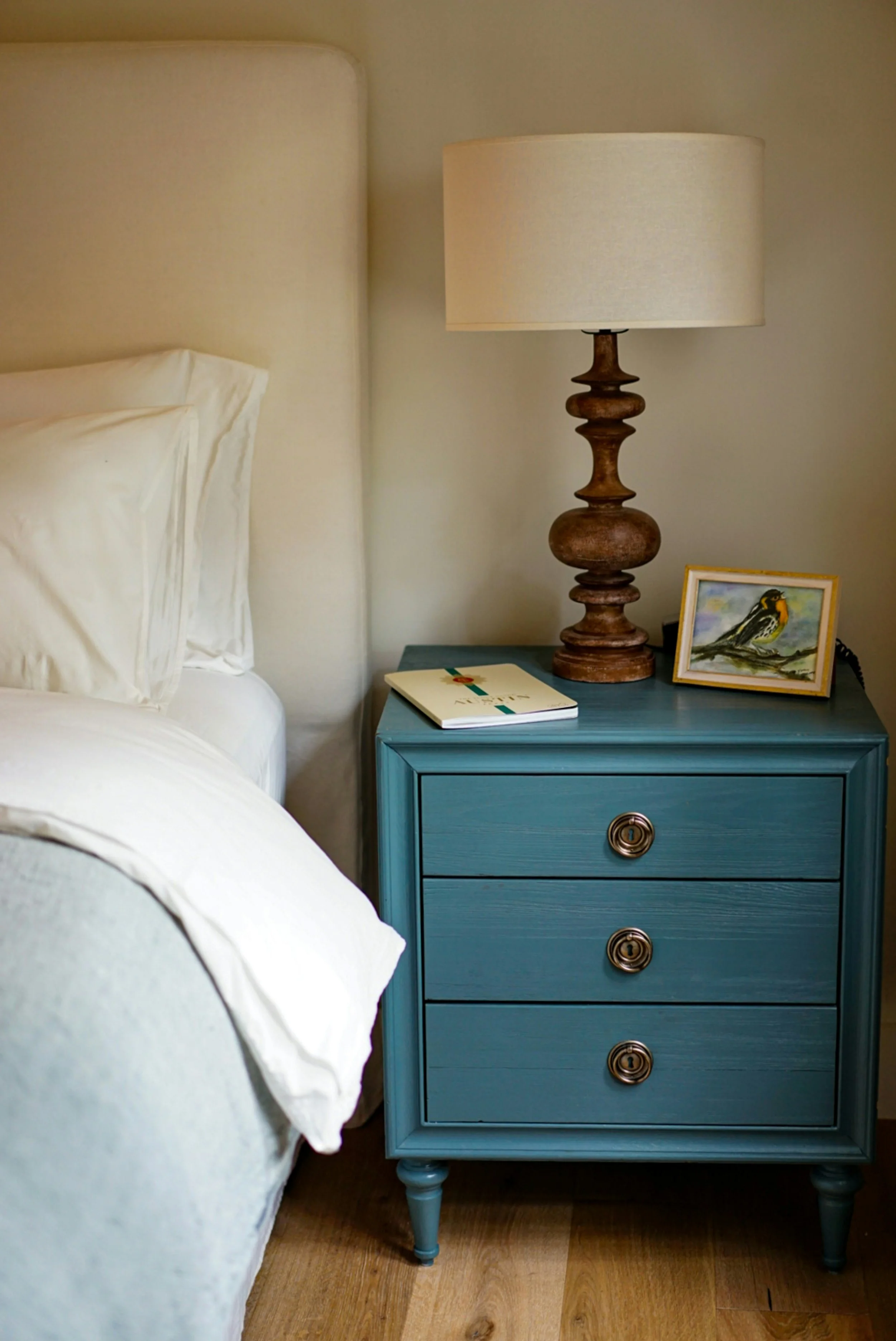
photo by Megan Bucknall
Charge your phone outside your bedroom, and get yourself an old-fashioned alarm clock for the nightstand.
Leave it in another room during meals.
Go to the bathroom without it.
Keep the first and last 30 minutes of your day screen-free.
Pick one. Just one. Then notice how you feel in your body when the phone isn't within arm's reach. There's often a little flicker of anxiety at first, and then, surprisingly often, something that feels a lot like relief.
Look up
Let me come back to that irony, because it holds the whole answer. The reason we couldn't find what we were looking for on the screen is that it was never on the screen. What we are aching for, the connection, the presence, the rest, the simple experience of being with ourselves, lives in the very place the phone keeps pulling us away from. It's in the conversation we are only half-having while we scroll. It's in the sky we forget to look up at. It's in the feeling we keep reaching past, and the self we keep avoiding. So the next time you feel that pull, try this instead. Look up. Take a breath. Let the feeling be there with you. You might be surprised to find that you, your own steady presence, are the support you were reaching for all along.
What would it feel like to be with yourself, without reaching for anything at all?

photo by Engin Akyurt